Shandong Fengtu IOT Technology Co., Ltd
Sales Manager:Ms. Emily Wang
Cel,Whatsapp,Wechat:+86 15898932201
Email:info@fengtutec.com
Add:No. 155 Optoelectronic Industry Accelerator, Gaoxin District, Weifang, Shandong, China


Sales Manager:Ms. Emily Wang
Cel,Whatsapp,Wechat:+86 15898932201
Email:info@fengtutec.com
Add:No. 155 Optoelectronic Industry Accelerator, Gaoxin District, Weifang, Shandong, China
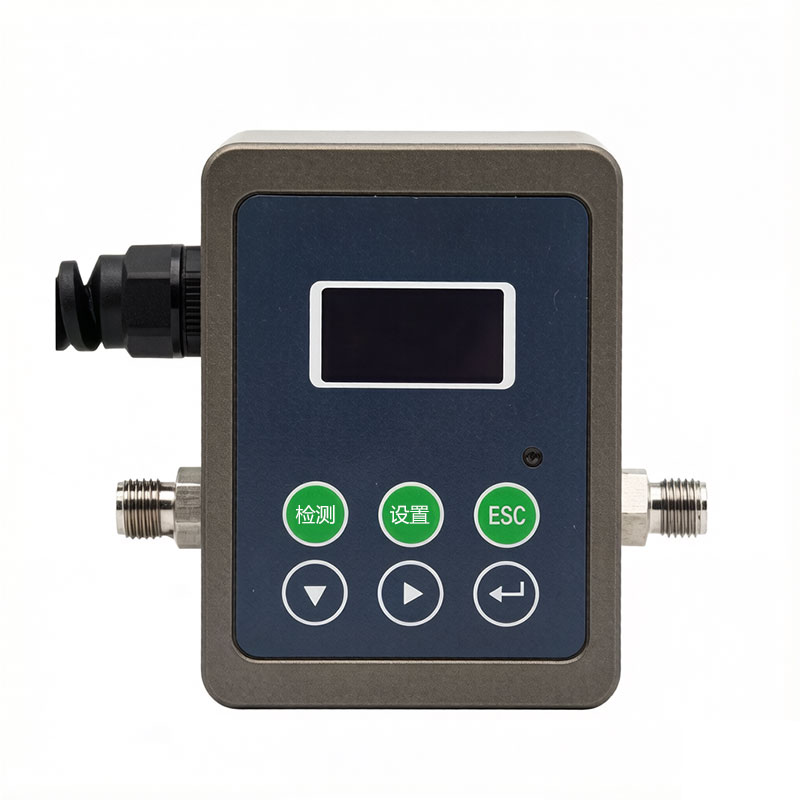
Model:WJ-4
Brand:fengtu
1、Oil cleanliness sensor Product Introduction
Oil cleanliness sensor WJ-4 is a sensor designed to monitor the size, quantity distribution, and corresponding contamination level of particles within an oil sample. It offers numerous advantages, including rapid detection speed, strong anti-interference capabilities, high precision, and excellent repeatability; its high-precision sensor ensures both high resolution and accuracy.
2、Oil cleanliness sensor Application Areas
Hydraulic power units, gearboxes, diesel engines, turbines, air compressors, and similar equipment.
3、Oil cleanliness sensor Applicable Oils
Industrial Lubricants: Hydraulic oil, gear oil, turbine oil, transformer oil.
Engine Oils: Diesel engine oil, aviation engine oil.
Light Fuels: Gasoline, kerosene, aviation fuel.
4、Oil cleanliness sensor Measurement Principle
Oil cleanliness sensor employs the Light Extinction method (also referred to as the Extinction or Light Blockage method)—as prescribed by ISO 4402 and ISO 11171—to assess fluid contamination levels.
A parallel light beam passes perpendicularly through a sample flow cell with a cross-sectional area of A, striking a photoelectric receiver. When the fluid stream contains no particles, the circuit outputs a voltage of E. When a particle with a projected area of a passes through the flow cell, it obstructs the parallel beam, causing the transmitted light to attenuate; at this moment, the circuit outputs a negative pulse with an amplitude of E。: E。=-(a/A)×E。
If the particle is spherical—or is characterized by an equivalent diameter d—and E equals 10 V, then E。=-7.854×d/A; that is, the projected area of the particle and the amplitude of the pulse voltage exhibit a linear relationship.
5、Oil cleanliness sensor Technical Parameters
| Measurement indicators | |||||||
| Detection range | 1~100μm | 4~70μm | |||||
| Measurement channel | 1µm, 2µm, 5µm, 10µm, 15µm, 25µm, 50µm, 100µm | ||||||
| 4µm(c); 4.6µm(c); 6µm(c); 10µm(c); 14µm(c); 21µm(c); 38µm(c); 70µm(c) | |||||||
| Detect flow rate | 10~300mL/min recommended to use 25mL/min | ||||||
| Inspection cycle | 5~60S (5S/gear) | ||||||
| Measurement repeatability | RSD<5% | ||||||
| Measurement accuracy | Number of particles ±20% (or ±1 cleanliness grade) | ||||||
| Built-in grade standards | NAS1638, ISO4406, GJB420A, GJB420B | ||||||
| Electrical parameters | |||||||
| Digital signal output | RS485 MODBUS RTU/ASCII code | ||||||
| Working voltage | DC24V±10% | ||||||
| Working current | <200mA | ||||||
| Light source type | Semiconductor laser | ||||||
| Temperature parameters | |||||||
| Working temperature | Fluid temperature | Storage temperature | |||||
| -20~60℃ | -20~125℃ | -40~85℃ | |||||
| Structural parameters | |||||||
| In and out of the oil interface | Protection level | Size | |||||
| G1/8-Φ6 with an outer diameter of 6mm low-pressure swivel hose. | IP65 | 101mm*148mm*71mm | |||||
| Other parameters | |||||||
| Allow oil pressure | Sensor weight | ||||||
| ≤2MPa, 2~40MPa (with pressure reducing valve) | 165g | ||||||
| Communication protocol-wire; | |||||||
| Red | Black | Brown | Blue | —— | |||
| DC24V+ | DC24V-(GND) | RS485A/+ | RS485B/- | —— | |||
Park weather station monitors elements such as temperature, humidity, and wind speed, serving the ecological management, visitor safety, and scientific research of scenic areas....
The atmospheric electric field mill is a lightning monitoring device based on the "field mill" principle. By measuring the intensity and fluctuations of the atmospheric electric field at ground level, it infers the charge state of thunderstorm clouds and issues lightning warnings 5 t...
electric field monitor is a fully digital electric field detection and lightning early warning platform that issues warnings before lightning strikes occur by monitoring and analyzing atmospheric electric field data. This system is widely used in lightning protection and disaster mitigation ef...
In the current era when the concepts of ecotourism and healthy living are widely spread, natural oxygen bars have become popular leisure destinations for people. As a key facility for measuring and maintaining the ecological quality of these areas, the Environmental Monitoring Station demonstrates t...


 Get a Free Quote
 Skype
Skype
 whatsapp
 mail
mail