Shandong Fengtu IOT Technology Co., Ltd
Sales Manager:Ms. Emily Wang
Cel,Whatsapp,Wechat:+86 15898932201
Email:info@fengtutec.com
Add:No. 155 Optoelectronic Industry Accelerator, Gaoxin District, Weifang, Shandong, China


Sales Manager:Ms. Emily Wang
Cel,Whatsapp,Wechat:+86 15898932201
Email:info@fengtutec.com
Add:No. 155 Optoelectronic Industry Accelerator, Gaoxin District, Weifang, Shandong, China
time:2025-12-24 10:38:59 source:Weather Station viewed:567 time
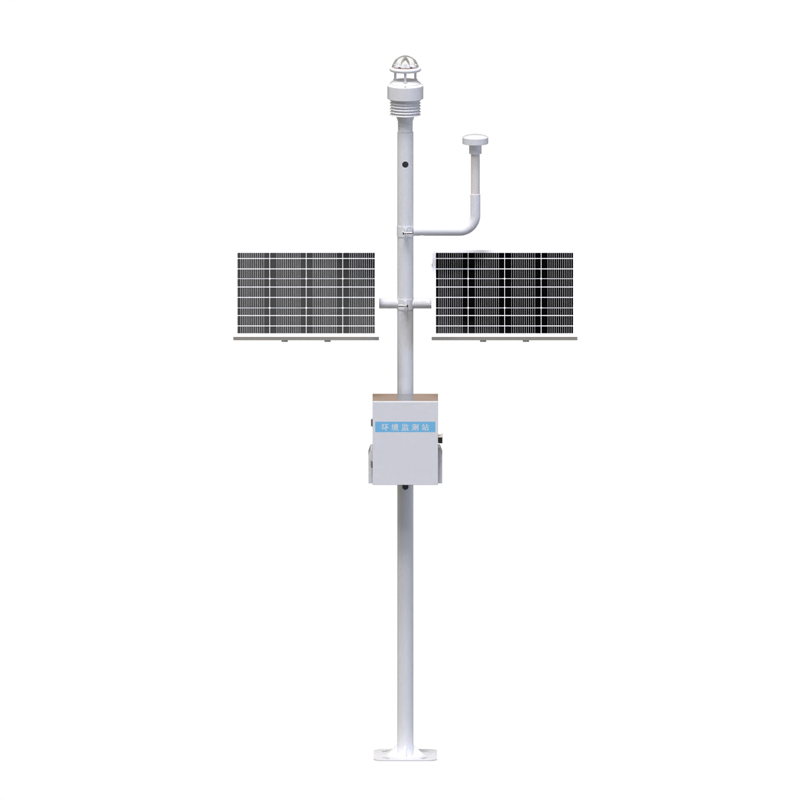
Ecological and environmental monitoring station is an automated device integrating Beidou-3 short message communication and meteorological and environmental monitoring technologies. It can monitor parameters such as wind speed and direction, temperature and humidity, atmospheric pressure, optical rainfall, total radiation, and negative oxygen ions in real time, making it suitable for long-term ecological environment observation in areas without network coverage.
Ecological and environmental monitoring station is an automated monitoring device that integrates modern communication technology and environmental sensing technology. Developed independently by relevant technical units, its core feature is the combination of the regional short message communication function of the Beidou-3 satellite navigation system with professional meteorological and environmental parameter monitoring capabilities. It aims to solve the communication difficulties of traditional monitoring equipment in remote areas without public network coverage.
The device can continuously and automatically monitor a series of parameters closely related to the ecological environment. Meteorological elements include wind speed, wind direction, air temperature, relative humidity, atmospheric pressure, and high-precision rainfall measured using optical principles. Environmental elements include total solar radiation and the concentration of negative oxygen ions in the air. These parameters are fundamental data for evaluating regional climate characteristics, ecological environment quality, health and wellness tourism potential, and conducting ecological research. All monitoring data is centrally processed and stored by the data collector integrated within the device.
The key technology that distinguishes it from traditional monitoring stations is its communication method. The device has a built-in Beidou-3 short message communication module. In remote areas such as forests, plateaus, deserts, and ocean islands where cellular mobile networks are unavailable, the monitoring station can encode and compress the collected parameter data and send it to the Beidou ground operation system via the Beidou satellite link, which then forwards it to the user-specified data receiving center. At the same time, the user center can also send commands to the remote monitoring station via this link, enabling remote configuration and control. This communication method is essentially unaffected by geographical environment, ensuring the stability and reliability of data transmission, and achieving truly unattended and remote monitoring.
From a hardware perspective, the monitoring station typically consists of a sensor array, a main control and data acquisition unit, a communication unit, a power system, and a mounting bracket. The sensors are selected based on the monitoring parameters and require stability and accuracy. The main control unit is responsible for periodically collecting sensor signals, data processing, and storage. The power system usually uses a solar panel combined with a battery to ensure long-term operation even during continuous cloudy and rainy weather. The entire equipment design emphasizes environmental adaptability, including waterproofing, lightning protection, and resistance to high and low temperatures, to meet the installation and operation requirements in complex outdoor environments.
The monitoring station's application scenarios are primarily concentrated in ecologically protected areas with limited communication capabilities. In nature reserves, it can be used for long-term monitoring of microclimate changes in core areas, providing data support for biodiversity conservation research. In national parks or forest parks, the monitoring data of negative oxygen ions and meteorological parameters can serve ecological health value assessment and tourism meteorological services. In plateau and desertification control areas, the monitoring data helps in studying the impact of climate change on the ecological environment. Furthermore, deployment in ecologically sensitive areas such as river source regions, areas surrounding large reservoirs, and coastal zones can accumulate valuable first-hand data for ecological assessment, environmental early warning, and scientific research.
Overall, this system, based on Beidou-3 short message communication, solves the problem of "data not being transmitted back" from remote areas through technological innovation. It extends the coverage of automated monitoring networks from areas with public networks to vast areas without signal coverage, greatly expanding the capabilities of dynamic ecological environment monitoring. The deployment and application of this equipment will help build an integrated, wider-coverage ecological environment monitoring Internet of Things, providing more comprehensive and timely data support for ecological civilization construction, environmental governance decision-making, and global climate change research.
Visibility can be measured by visual observation, relying on manual inspection to estimate the visibility distance based on whether a certain reference object is visible. This method is simple and intuitive, but it is highly subjective and has poor standardization and objectivity.We recommend using...
In scenarios such as emergency rescue and outdoor operations, there is a need to accurately grasp meteorological data, which requires the use of a Small Handheld Portable Weather Station. This is a practical tool. It integrates monitoring functions for 11 core meteorological elements, meeting data n...
Meteorological monitoring is closely intertwined with our daily lives. From daily commuting to agricultural production, from industrial operations to urban planning, meteorological information plays a pivotal role. Precise meteorological monitoring enables early warnings of severe weather events suc...
An Automatic Farmland Weather Station is an agricultural management system based on information technology. It continuously collects environmental data from agricultural production sites and provides decision support for production management through data analysis.The system uses a sensor network to...


 Skype
Skype
 whatsapp
 mail
mail