Shandong Fengtu IOT Technology Co., Ltd
Sales Manager:Ms. Emily Wang
Cel,Whatsapp,Wechat:+86 15898932201
Email:info@fengtutec.com
Add:No. 155 Optoelectronic Industry Accelerator, Gaoxin District, Weifang, Shandong, China


Sales Manager:Ms. Emily Wang
Cel,Whatsapp,Wechat:+86 15898932201
Email:info@fengtutec.com
Add:No. 155 Optoelectronic Industry Accelerator, Gaoxin District, Weifang, Shandong, China
time:2026-04-13 11:07:12 source:Weather Station viewed:294 time
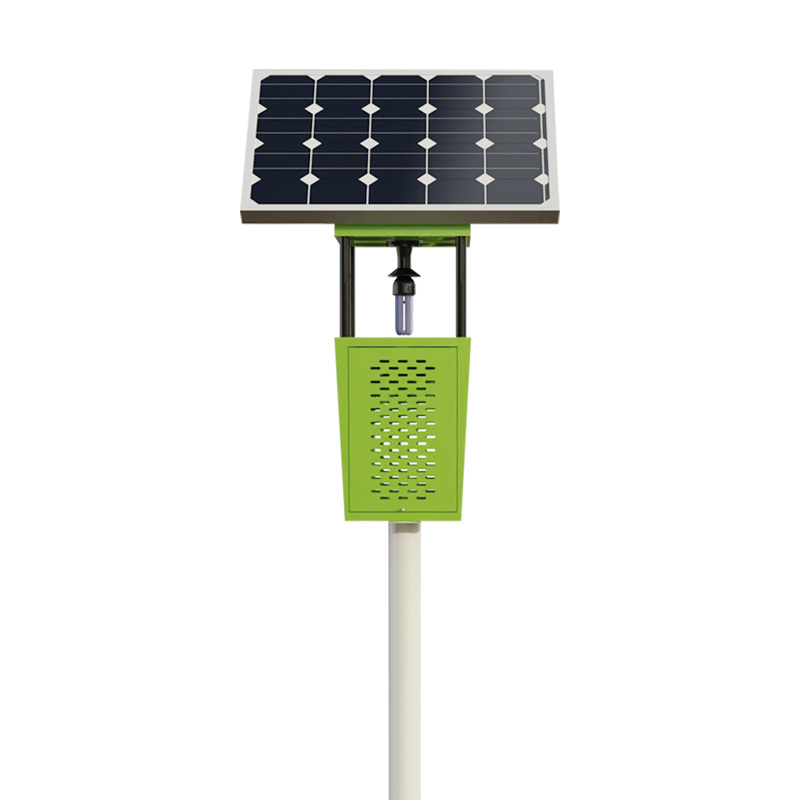
Wind-suction insect traps employ negative-pressure air-suction technology to effectively eliminate mosquitoes. By utilizing a light source of a specific wavelength to attract mosquitoes, the device then employs a fan to generate negative pressure, drawing the insects into a collection chamber where they are air-dried to death. This device is capable of capturing insects of all sizes, thereby effectively controlling pest infestations. Widely applied in outdoor settings such as orchards, farmlands, and residential courtyards, it plays a significant role in enhancing the standards of eco-friendly pest management.
The wind-suction insect trap represents a new generation of eco-friendly pest control equipment. It integrates traditional insect-trap designs with modern technology, utilizing specific light sources to lure insects and employing mechanical mechanisms to capture or eliminate them. The device uses light waves to attract pests toward the unit; subsequently, a rotating fan generates a negative-pressure vortex that sucks the insects into a collection receptacle, where they are air-dried and dehydrated, thereby achieving the objective of pest eradication. Typically powered by solar panels, the device stores energy during the day to provide power to the insect trap at night, creating a light source that attracts nocturnal pests. Given that this device relies on fan-generated suction to eliminate pests, how effective is it, in reality, against pests like mosquitoes—insects known for their strong flight capabilities and extensive roaming ranges?
The answer is a resounding yes. Wind-suction insect traps demonstrate highly significant efficacy in capturing mosquitoes. Their operational principle unfolds in three distinct steps: First, the device is equipped with ultraviolet (UV) light tubes of a specific wavelength (e.g., 365 nm); capitalizing on the mosquitoes' natural phototaxis (attraction to light), these lights lure the insects into the immediate vicinity of the device. Second, as the mosquitoes approach, the built-in fan activates, generating a negative-pressure airflow that draws the insects into the interior of the device. Finally, the captured mosquitoes become trapped within a collection chamber featuring an escape-proof design; as the fan continues to operate, the insects are subjected to continuous airflow, causing them to dehydrate and perish.
Compared to traditional electric-grid mosquito zappers, wind-suction insect traps offer distinct advantages. Lacking a high-voltage electric grid, they do not generate electrical sparks; consequently, they offer a significantly higher level of safety, making them particularly suitable for use in environments with flammability risks—such as orchards, farmlands, and gas stations—as well as in outdoor areas frequented by people. Furthermore, the device operates with minimal noise; unlike electric-grid units that emit loud "crackling" sounds, the wind-suction trap operates quietly, ensuring a more peaceful environment during nighttime use. The insect collection chamber features a sealed design, allowing captured insects to air-dry; this prevents decomposition and eliminates the risk of bacterial proliferation.
In terms of application, this wind-suction insect trap is primarily designed for use in outdoor orchards and greenhouses. It supports solar power supply and 4G remote control capabilities, enabling fully automated, unattended mosquito elimination. In the agricultural sector, utilizing this device can reduce pesticide usage by 30% to 50%, thereby lowering operational costs while simultaneously minimizing environmental pollution. For outdoor recreational settings—such as private gardens, bed-and-breakfasts, and campsites—the device actively draws nearby flying mosquitoes into its collection chamber, effectively reducing the nuisance of insect bites for people in the vicinity. It should be noted, however, that the device's efficacy is subject to environmental conditions; its performance may be compromised by interference from strong light sources, such as streetlights. Furthermore, it is primarily effective against nocturnal mosquito species that exhibit strong phototaxis (attraction to light), while its effectiveness against species with weaker phototactic tendencies is limited.
A "natural oxygen bar" is a treasured place bestowed by nature upon humanity, where the air is exceptionally fresh and rich in a high concentration of negative oxygen ions.Negative oxygen ions can be regarded as the "vitamins" in the air. After entering the human body through the...
The industrial park environmental monitoring system FT-CQX12 is an environmental monitoring device launched by Fengtu Technology. It is mainly used in industrial parks. It can monitor the wind speed, wind direction, temperature, humidity, air pressure, optical rainfall, pm2.5, pm10, etc. CO, NO2, SO...
Both the piezoelectric rain gauge and the Stainless Steel Tipping Bucket Rain Gauge are commonly used tools for measuring rainfall data. So, which of these two products is better? How should consumers choose between them? Next, the editor will provide a detailed comparison of the differences between...
Designed specifically for transmission line corridors, these environmental monitoring stations can be flexibly mounted on power pylons. They capture high-precision data—including wind speed, wind direction, temperature, humidity, air pressure, and rainfall—and transmit it wirelessly to a monitorin...


 Skype
Skype
 whatsapp
 mail
mail