Shandong Fengtu IOT Technology Co., Ltd
Sales Manager:Ms. Emily Wang
Cel,Whatsapp,Wechat:+86 15898932201
Email:info@fengtutec.com
Add:No. 155 Optoelectronic Industry Accelerator, Gaoxin District, Weifang, Shandong, China


Sales Manager:Ms. Emily Wang
Cel,Whatsapp,Wechat:+86 15898932201
Email:info@fengtutec.com
Add:No. 155 Optoelectronic Industry Accelerator, Gaoxin District, Weifang, Shandong, China
time:2026-05-27 10:33:52 source:Weather Station viewed:173 time
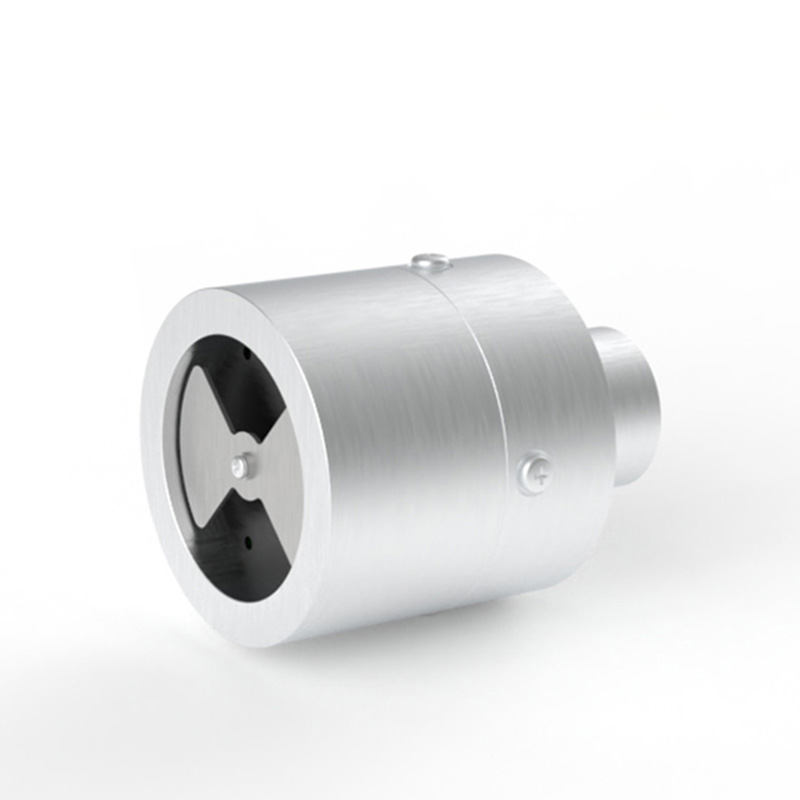
Lightning monitor monitors and warns of lightning activity by measuring changes in the ground's electrostatic field strength. Based on the field-milling induction principle, its measurement range covers -100kV/m to 100kV/m, with a response time of 3 seconds. It is suitable for continuous monitoring in meteorological stations, power facilities, petrochemical plants, and other locations.
Lightning monitor is a lightning monitoring and early warning device specifically designed to measure the intensity and changes of the atmospheric electric field. When a potential difference exists between the ground and the atmosphere, the instrument's electric field sensor generates induced charges, the intensity of which is directly related to the accumulation and distribution of charges in the clouds. When charge separation occurs in the clouds, the ground electric field strength changes accordingly. By measuring these continuous changes, the trend of the upper-level cloud electric field can be deduced, allowing for short-term forecasts of the risk of lightning strikes. The Lightning monitor sensor typically employs a field-grinding principle, consisting of a stator (induction plates) and a rotor (grounding shield). The rotor is driven by a motor, converting the induced charge on the stator into a voltage proportional to the atmospheric electric field. The signal processing circuit amplifies the weak alternating signal, performs an A/D conversion, and the processor calculates the current electric field strength and polarity. The data is transmitted to the central station in real-time via wired or wireless communication modules.
In terms of specifications, the Lightning monitor sensor has a range of -100kV/m to 100kV/m, an accuracy of ±0.001%F.S, a response time of 3 seconds, and a detection radius covering an area of 10 to 20 kilometers. The sensor components are typically made of 304 stainless steel or 6061 aluminum alloy to ensure corrosion resistance for long-term outdoor use. For protection, the sealed sensor head prevents moisture intrusion, and the circuit board is housed in a sealed metal container to prevent moisture absorption. The housing is made of cast aluminum alloy, and each blade is chrome-plated to prevent rust. The core chip uses a low-power ARM processor, simplifying equipment upgrades and maintenance. The communication interface features surge and lightning protection, offering strong anti-interference capabilities. Some models also include a GPS module to ensure accurate time synchronization of device data. Power supply options include 12VDC or solar power, with power consumption controlled between 0.5W and 0.65W.
In terms of applications, Lightning monitor is widely used in meteorological forecasting, forest lightning fire early warning, aerospace support, and power system security. After deployment at meteorological stations, it can continuously monitor lightning activity within the region, providing predictive data on lightning probability, intensity, and development trends. For locations vulnerable to lightning strikes, such as petrochemical plants, communication base stations, power facilities, and high-rise buildings, Lightning monitor installed nearby can monitor the dynamic changes in the atmospheric electric field in real time. When the electric field strength exceeds a preset threshold, it automatically triggers multi-level alarms, reminding staff to take measures such as stopping outdoor operations and shutting down critical equipment. When combined with a lightning location system, the Lightning monitor system integrates lightning location data with atmospheric electric field data for analysis. This provides a more intuitive reflection of local atmospheric electric field changes and the occurrence of lightning in the surrounding area, improving the accuracy of lightning forecasts. The equipment is easy to install, integrating the sensing and data acquisition components. It supports both GPRS wireless transmission and wired access, and can be quickly deployed in critical locations requiring lightning protection, such as oil and gas depots, tourist attractions, stadiums, airports, and ports.
Agricultural meteorological stations is a device used for real-time monitoring of meteorological parameters in the farmland environment, including air temperature, humidity, soil moisture, soil temperature, wind speed, wind direction, rainfall, and light intensity. It features data acquisition, wireless transmission, automatic storage, threshold alarming, and data analysis functions, supporting agricultural management, pest and disease forecasting, and scientific research and teaching....
Micro-meteorology refers to the atmospheric conditions within small-scale areas near the earth's surface. Key monitoring parameters include wind speed, wind direction, air temperature, humidity, atmospheric pressure, and optionally, rainfall. These parameters exhibit significant gradient variati...
Temperature and humidity are common terms in daily life, which can be divided into temperature and humidity. Temperature measures the degree of hotness or coldness of an object and is commonly expressed in degrees Celsius and other units. Humidity reflects the water vapor content in the air and is d...
Soil moisture sensors utilize the Frequency Domain Reflectometry (FDR) principle, achieving an accuracy range of ±2% to ±3%. Certain models support the simultaneous measurement of soil temperature, moisture, and electrical conductivity across multiple soil profile layers, making them suitabl...


 Skype
Skype
 whatsapp
 mail
mail