Shandong Fengtu IOT Technology Co., Ltd
Sales Manager:Ms. Emily Wang
Cel,Whatsapp,Wechat:+86 15898932201
Email:info@fengtutec.com
Add:No. 155 Optoelectronic Industry Accelerator, Gaoxin District, Weifang, Shandong, China


Sales Manager:Ms. Emily Wang
Cel,Whatsapp,Wechat:+86 15898932201
Email:info@fengtutec.com
Add:No. 155 Optoelectronic Industry Accelerator, Gaoxin District, Weifang, Shandong, China
time:2024-12-16 09:16:43 source:Weather Station viewed:542 time
In recent years, the construction of high-standard farmland has achieved remarkable results, with its core being "turning small plots into large ones" and "transforming grain fields into fertile ones". In the past, farmland fragmentation was severe, with ridges crisscrossing each other. Large agricultural machinery could hardly operate, and irrigation and drainage were inconvenient, which restricted the development of agriculture. Nowadays, through land leveling and integration, small plots of farmland have been combined into large ones, and the neatly arranged fields stretch as far as the eye can see.
During the construction process, water conservancy facilities have been continuously improved. Irrigation channels are densely woven like a network, and tube wells are reasonably distributed, ensuring that the farmland can be protected from droughts and floods. Wide and flat farm roads have been built to reach the fields, greatly improving the efficiency of agricultural materials transportation and agricultural machinery operations. Meanwhile, soil improvement has been carried out by applying more organic fertilizers to enhance soil fertility. Shelter forest networks have been constructed to reduce soil erosion and improve the ecological environment.
The construction of high-standard farmland has made agricultural production more efficient, green and sustainable, steadily increasing grain production capacity, laying a solid foundation for ensuring national food security and adding a significant touch to the magnificent picture of rural revitalization, helping agriculture move towards a new journey of modernization.
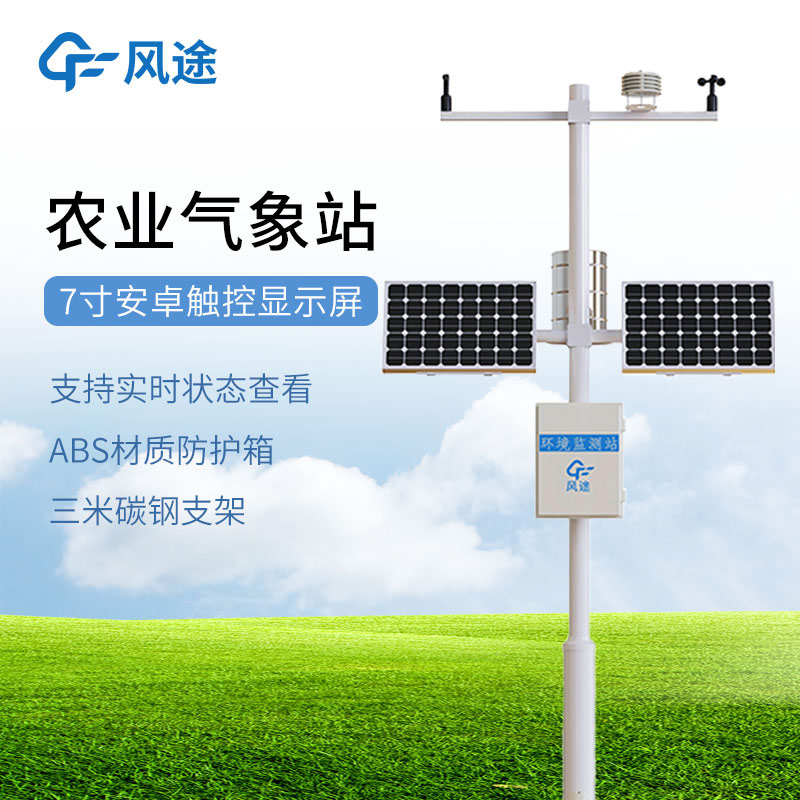
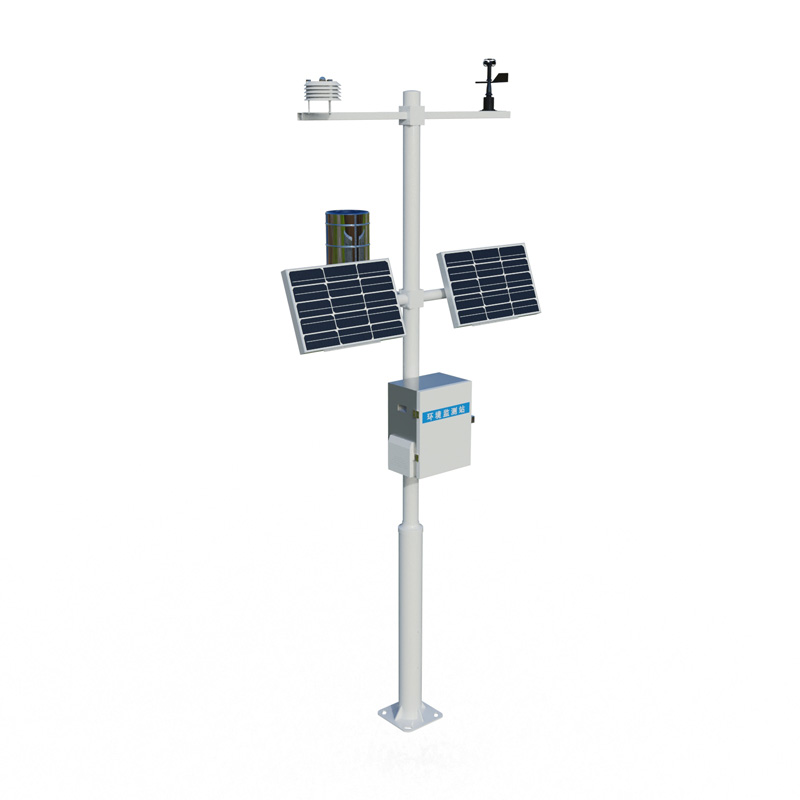
With the continuous improvement of the scale and modernization degree of agricultural production, meteorological monitoring has an increasingly greater impact on agriculture. High-standard Agricultural Weather Stations are installed in the vast farmland. Equipped with various meteorological sensors, they can monitor multiple meteorological elements such as air temperature, humidity, air pressure, wind speed, wind direction and precipitation in real time and transmit these data quickly and accurately to the data processing center.
These accurate meteorological data play a crucial role in the arrangement of farming activities. For example, before precipitation arrives, farmers can make preparations for field drainage in advance to prevent waterlogging from damaging crops. Based on temperature and light data, the time for irrigation and fertilization can be reasonably arranged to improve fertilizer utilization efficiency and promote the healthy growth of crops.
It can be said that high-standard Agricultural Weather Stations provide indispensable meteorological service guarantees for agricultural production and have become an indispensable part of the construction of modern high-standard farmland, helping the "grain fields" continuously transform into higher-yielding and higher-quality "fertile fields".
The Visibility Sensor is a specialized sensor device designed for automatic and continuous monitoring of atmospheric visibility, playing a vital role in fields such as meteorological observation and environmental monitoring. Its core working mechanism is based on the principle of forward scattering....
Water and Rain Monitoring SystemWater and rain conditions are important hydrological reference materials and are of great significance in regional water resources allocation and management. It refers to the water and rain conditions, and the specific index parameters are water level, flow rate, flow...
Against the backdrop of intensifying global climate change, frequent extreme weather events, and the growing reliance on refined meteorological data across various industries, high-precision and highly reliable environmental monitoring has become a critical need in numerous fields such as meteorolog...
Six-Parameter Automatic Weather Station integrates six sensors—measuring wind speed, wind direction, temperature, humidity, air pressure, and optical rainfall—and outputs all parameters simultaneously via a digital communication interface. The system consists of a meteorological sensor unit,...



 Skype
Skype
 whatsapp
 mail
mail