Shandong Fengtu IOT Technology Co., Ltd
Sales Manager:Ms. Emily Wang
Cel,Whatsapp,Wechat:+86 15898932201
Email:info@fengtutec.com
Add:No. 155 Optoelectronic Industry Accelerator, Gaoxin District, Weifang, Shandong, China


Sales Manager:Ms. Emily Wang
Cel,Whatsapp,Wechat:+86 15898932201
Email:info@fengtutec.com
Add:No. 155 Optoelectronic Industry Accelerator, Gaoxin District, Weifang, Shandong, China
time:2026-05-22 10:41:53 source:Weather Station viewed:201 time
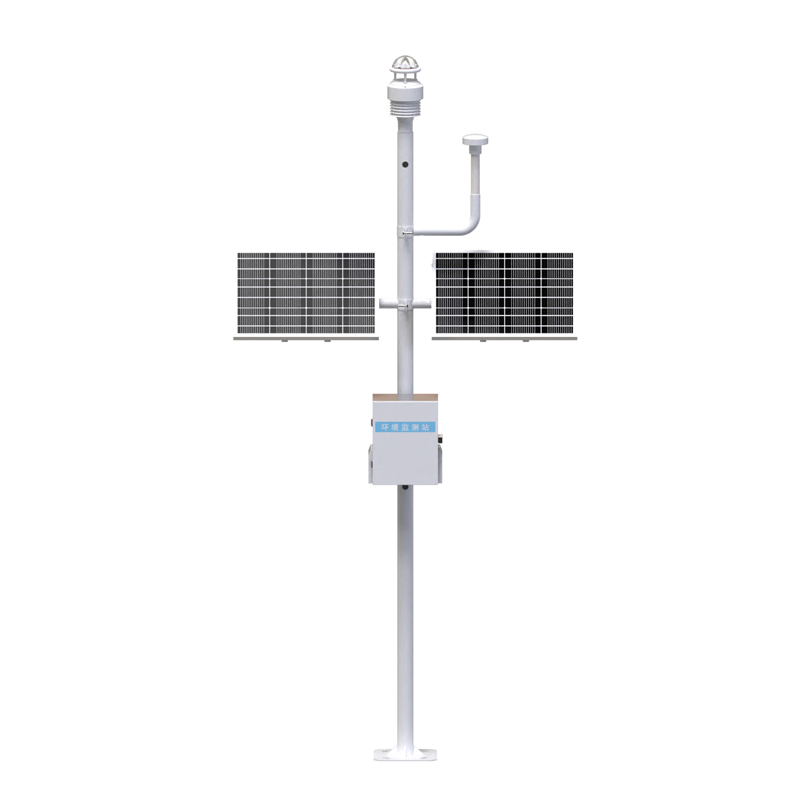
The Beidou Weather Station combines Beidou-3 short message communication with meteorological sensors to achieve 24/7 unattended monitoring. The equipment uses an integrated eight-element sensor, and data is transmitted back in real-time via satellite link, solving the problem of meteorological data collection in signal-deprived areas.
The Beidou Weather Station is an automated meteorological monitoring device that combines Beidou-3 regional short message communication technology with meteorological environment monitoring technology. Its core value lies in breaking through the dependence of traditional weather stations on terrestrial communication networks. In remote mountainous areas, uninhabited plateaus, deserts, and islands where mobile communication signals are unavailable, conventional automatic weather stations cannot transmit data due to the inability to access GPRS or 4G signals. The Beidou Weather Station solves this bottleneck through its built-in Beidou-3 short message module. Utilizing the unique short message communication function of the Beidou satellite system, a single message can reach over 78 bytes, even up to 1000 Chinese characters. After the data acquisition unit collects sensor measurements, the data is encoded by the Beidou communication module and transmitted to the data center via satellite link, achieving full automation from data acquisition to transmission. From a hardware perspective, the BeiDou meteorological station mainly consists of five parts: a sensor unit, a data acquisition unit, a BeiDou data transmission terminal, a solar power supply system, and a protective enclosure. The sensor unit integrates the measurement functions of eight meteorological elements: wind speed, wind direction, temperature, humidity, atmospheric pressure, optical rainfall, total radiation, and negative oxygen ions. It adopts an eight-element integrated sensor design, outputting all eight parameters at once via a digital communication interface. Wind speed measurement uses ultrasonic principles, with a range of 0 to 60 meters per second, and wind direction measurement range of 0 to 360 degrees. The sensor housing is made of imported ASA material, achieving a protection level of IP65 or higher, effectively resisting harsh environments such as salt spray. The data acquisition unit is responsible for collecting sensor data and performing preliminary processing. The BeiDou data transmission terminal transmits the processed data to the data center via the BeiDou satellite link, without relying on terrestrial mobile communication networks. The power supply system uses solar photovoltaic panels in conjunction with a large-capacity battery, maintaining normal operation of the equipment even under continuous cloudy and rainy conditions. The protective enclosure achieves an IP67 protection level, suitable for long-term unattended outdoor environments.
In terms of application cases, the BeiDou meteorological station has been put into actual operation in multiple regions. In Dali County, Shaanxi Province, the county's first BeiDou satellite-transmitted automatic weather station was built near the Yellow River, Wei River, and Luo River, filling a gap in the county's meteorological monitoring and providing forecasting and early warning support for flood prevention and control. The Yining County Meteorological Bureau in Xinjiang completed the installation and commissioning of a BeiDou-based wind-solar hybrid automatic weather station, solving the problem of conventional communication methods being unable to cover remote areas. The Xiangcheng County Meteorological Bureau in Sichuan Province completed the installation of BeiDou systems on 23 regional meteorological observation stations, covering key areas such as high mountains, valleys, and remote villages. Even under severe weather conditions such as heavy rain, blizzards, and mudslides, the collected data on temperature, precipitation, wind speed, and humidity can still be transmitted accurately and in real time to the data processing center. The Chuxiong National Basic Meteorological Station's BeiDou emergency communication station has been put into operation, using BeiDou short messages to establish a satellite-based emergency backup communication system for the observation station when conventional ground communication is unavailable or communication links are damaged by natural disasters. With the continuous improvement of the short message communication service capabilities of the BeiDou-3 global system, BeiDou meteorological stations are forming a complementary air-ground integrated monitoring system with traditional meteorological observation networks.
Visibility data is crucial for the safe conduct of various activities, and the Environment Visibility Sensor is the "hardcore player" that can shoulder this responsibility.In terms of protection, its housing is made of high-quality aluminum material, treated with anodizing and painting, fu...
In today's booming tourism industry, the installation of scenic weather stations in scenic areas has become a crucial measure to enhance the level of operation management and the tourist experience.From the perspective of enhancing the tourist experience, the weather warning function of the scen...
These sensors are atmospheric electric field monitoring devices based on the principle of electric field induction. They have a measurement range of -100kV/m to 100kV/m, an accuracy of ±0.001%F.S., and a response time of 3 seconds. Utilizing Modbus-485 communication, the devices can monitor c...
The Fengtu Visibility Sensor is a professional device used to measure atmospheric transparency, quantifying Meteorological Optical Range (MOR) to provide critical data for traffic safety and weather warning systems.Its mainstream working principle is "forward scattering". The sensor's...


 Skype
Skype
 whatsapp
 mail
mail